Every Italian schooled in Italy has read Carlo Levi’s book Christ Stopped at Eboli.
Eboli is a town just south of Salerno in Southern Italy. Once you go south past Amalfi, you enter the REAL Italy.
Carlo Levi was a doctor, a writer and painter who originally lived in Turin in the northern province of Piedmonte.
He was an outspoken opponent to the creeping Fascism during the time that Hitler and Mousellini were teaming up to unleash hell on the entire planet.
Because he was not quiet about his beliefs, he was sent into exile for two years to a tiny southern Italian hill town in the southern province of Lucania called Aliano.
Aliano street sign directing you to the house of Carlo Levy
It was not unusual at that time for people to be exiled. In Aliano there were a few exiles, They had strict rules of conduct that they had to adhere to.
The reason Levi’s book is so significant is that his writings went on to shed light on what was later called the Shame of Italy.
The Shame of Italy was the fact that the people of the nearby hill town of Matera lived in abject squalor. They had dug caves out of the rock and lived in medieval houses made from the white stone that is ubiquitous in that region.
Because the landscape in Southern Italy is arid, in the days before large scale irrigation, people lived on the meager fare they could scratch out on the farms and their livestock.
Matera in the evening
Many times the animals would live in the houses with the families for warmth in Winter.
Malaria was rampant throughout Matera and the conditions made it hell.
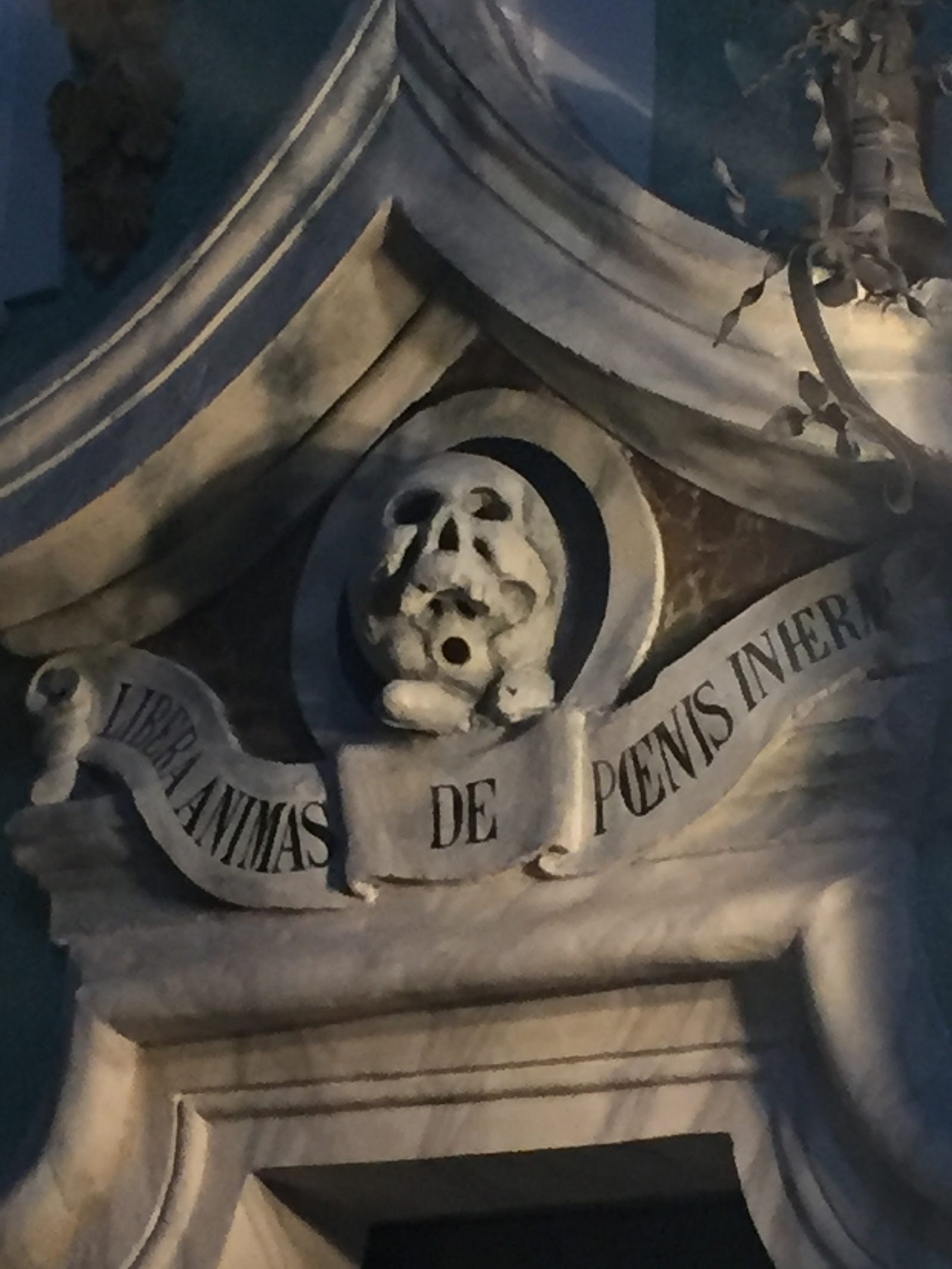
Detail Church of the Purgatory, Matera
For these reasons the locals told Levi that “Cristo si e Fermata A Eboli”, Christ stopped at Eboli, north of them and not even Christ himself had cared to come this far south.
Levi’s book caused an uproar and finally the people of Matera were moved out and into government built houses. They were provided food and medicine and Matera sat lonely and vacant for awhile.
Finally in recent years, the beauty and history of Matera has drawn new interest and people have moved back and created a new and vibrant Matera.
Matera is now a cultural Mecca drawing not only tourists but musicians, artists and film makers.
Some of the scenes from Mel Gibson’s Passion of the Christ were filmed here.
Street sign Aliano
Last Fall my husband and I visited Matera and Aliano. We had read and reread Levi’s book and we wanted to see where this intriguing story had played out.
Even the church in Aliano had Gli Occhi (The eyes)
Aliano was fascinating to us as we coud see the actual location where Levi had experienced his exile. We watch his story spring to life.
View from Aliano
The View from Aliano
Although being exiled there today would not be much of a hardship, back then it was a rough existence filled with illness, hopelessness, superstition and endless arbitrary bureaucratic red tape that made the smallest effort to make things better suddenly illegal.
Today Aliano is a lovely hill town springing up in the middle of arid land. It is sleepy and unhurried. Businesses thrive and the restaurants are good, even great.
Buildings of Carlo Levy’s exile
Buses filled with school children file into the town and later, out again because the students are still studying Christ Stopped at Eboli and probably will for a very long time to come.
But superstition still dips its hat there as the restaurant we had lunch in was called “La Laconda Con Gli Occhi” or the “Inn of the eyes”.
The building itself sports the architectural design that when you look at it from the front, looks like a face with eyes. It is said that the eyes keep evil spirits away.
This seems to work fabulously as the food and service were amazing and we highly recommend it.
Street scene in Matera
Street Scene in Matera
As we later arrived in Matera, we were taken aback by the modern buildings and streets. It was teeming with tourists despite the fact that it is a bit of a trek to get to.
Street shops in Matera
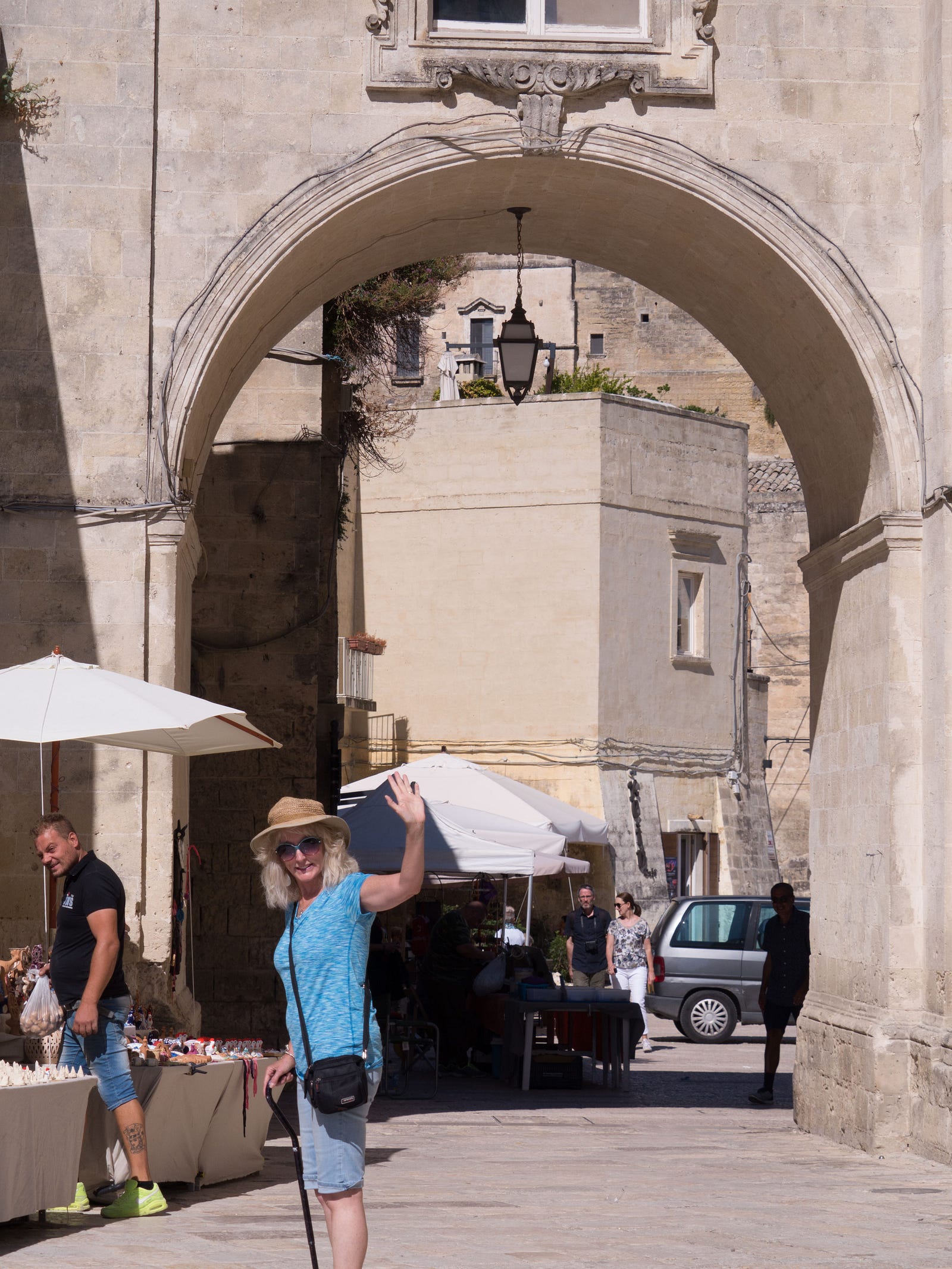
Street Shops in Matera
We had booked an AIR BNB there overlooking the Sassi de Matera (the old town). This is where the people lived as illustrated in Levy’s book. Our balcony overlooked the Sassi and in the evening the gold lights came up making it look like a fairy town.
As dinner time approached we walked to the town center. Matera is a vision of white stone streets and houses.
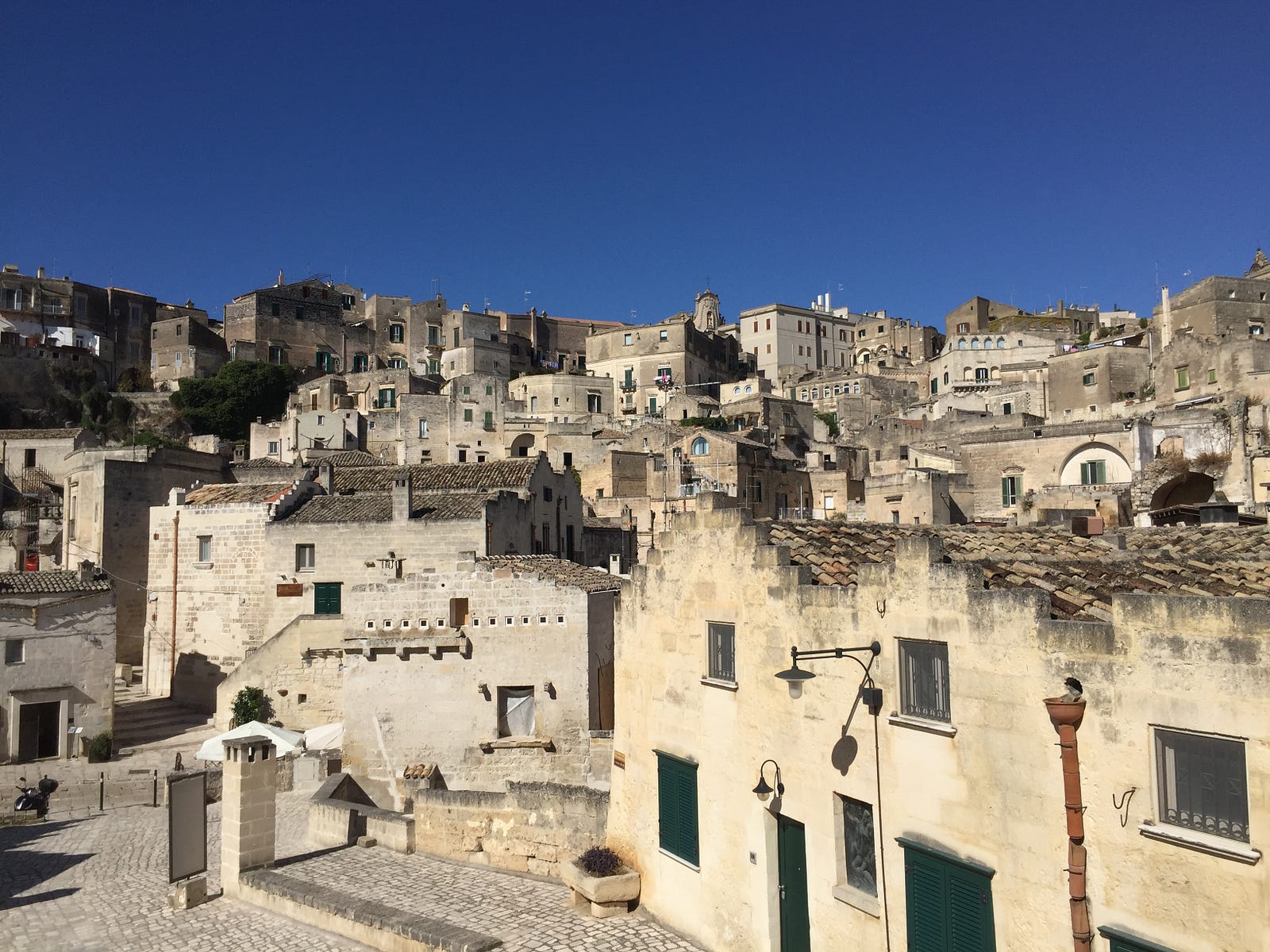
The Sassi looking up to the shopping district
Matera looking up to the shopping district
The people were out taking the passagiata, the charming custom of walking and talking to each other that happens every night, eveywhere in Italy.
As you wander through the town you hear music everywhere. Matera, having elected itself a cultural center has several music academies there. On our walk we alternately heard jazz, opera and rock music filtering through the Sassi.
As the sun set the music drifted out over the town and the Sassi. Matera has come into her own.
Matera is absolutely worth the time and effort to get there. It is not that difficult and the landscape on the drive over changes dramatically and is never boring.
Getting to Matera by car is easiest although you can get there on public transport.
The Hill Behind Me was Where Mel Gibson’s The Passion Was Filmed
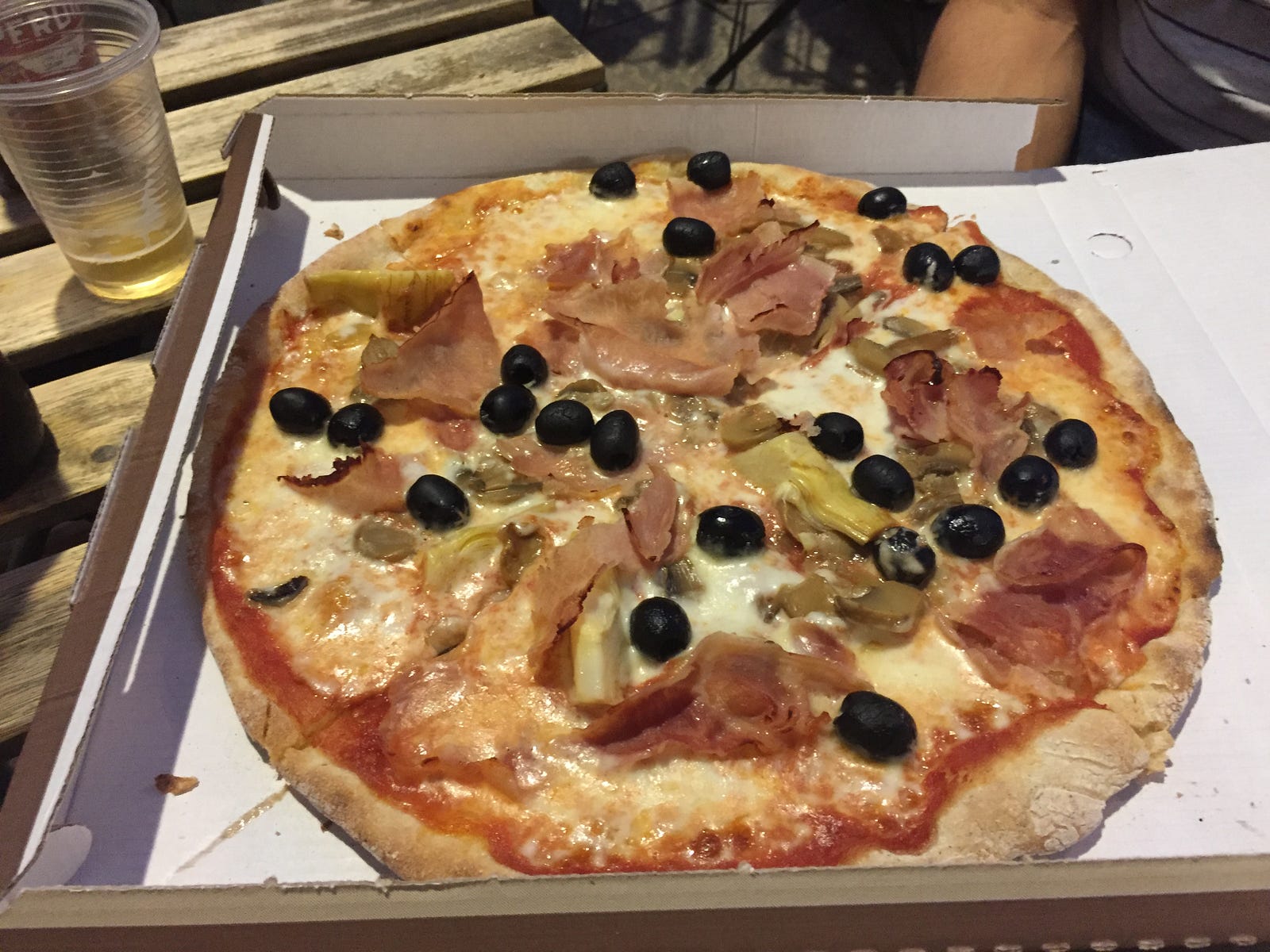
Matera has done a lot to cater to tourists. I had no trouble finding several gluten free restaurants and vegetarian dishes are available at many places. In fact the gluten free pizza and beer I had was way better than any GF pizza here in the states.
Gluten Free Pizza
Before you go, read Levy’s book. Although his book paints a dreary but true picture of what Matera was like, you will see a true life happy ending when you arrive
The best time to go is during shoulder season. The weather can be brutally hot in Summer and cold in Winter. Spring and Fall are magnificent.
If you are interested in visiting Matera or anywhere in Italy, contact me.
IF you have seen Matera, please leave a comment about your experiences there.
The Phoenix City; Warsaw and her Indomitable People
In July, 2013 my husband and I visited Warsaw, Poland on a business trip.
Initially I was not super excited about seeing Poland in general because of what I had heard and seen on various travel sites and TV programs.
These programs portray a Poland whose identity has been forced upon them by a vicious Nazi regime in World War II.
Before I visited, I had the impression that this was a country of emotionally crippled people who had somehow managed to struggle and squeak by after having most of their country destroyed by Hitler and his fascist cronies.
Old Town Warsaw
These programs portrayed a Poland that could never recover from the memory of the atrocities that were perpetrated on her and would likely be the victim of that trauma forever.
At least that is what I perceived and I think that most of the reason I felt that way was because of the huge focus placed on the Nazi and Soviet occupations. It was a time when far too many people were abused horribly and then lost their lives simply because of the whims of madmen.
Warsaw Uprising Monument
I have studied the Nazi scourge, read the letters from Goebels and seen many documentaries on Goering, Hitler and other members of the regime.
It fascinates me in a weird way that that level of insanity can exist and I never cease to wonder how anyone can believe that acts of that nature could ever be considered right or just, or even a necessary evil.
It is a close up study of the complete psychosis of a group of individuals as well as the abject willingness of entire countries (with some very brave and stellar exceptions) to overlook atrocities of the most brutal nature being perpetrated on one’s neighbors.
It is difficult not to focus on something so horrible but, I have come to realize that the Polish people do not wish to be defined by their Nazi occupation nor do they wish to live forever as victims of unspeakable horrors.
In any case, as I flew into Warsaw, I was expecting to see a grey, discouraged city with really nothing to offer visitors but old horrific memories of what had happened to it and its people.
Happily, as my husband and his work buddy were driving us from the airport, we saw some vestiges of communist type blocks of flats, but they didn’t look that bad.
There were fields and parks which I did not expect and as we drove into the completely rebuilt old town, I was overwhelmed by its beauty.
During World War II, Warsaw was occupied by the Germans and the Soviet Union, both of which were hostile to Poland and wanted to eradicate it and its people.
The occupation which lasted almost 7 years was particularly brutal and many people were killed there in non military operations because they were targeted for destruction by the Nazi regime. Toward the end of the war, the people of the Jewish Ghetto staged an uprising.
Most of the Jewish Ghetto population was slated to be shipped off to the Treblinka extermination camp. Rather than stand by and let this occur, a desperate uprising was staged by the Jews of the Ghetto.
Utilizing their underground system of tunnels and the sewers under Warsaw, they surged in and tried to take out the German occupiers. Unfortunately they were too few and too weak. The German army was well fed, well armed and too numerous.
Most of the Jews lost their lives.
Hitler was so furious about this uprising that he intentionally and meticulously destroyed 85% of the buildings in Warsaw, including the churches.
He used the few remaining resources he had to carry out this destruction and I am sure he thought that he had defeated the Poles forever.
After the smoke cleared, however, sparks of life started rising up from the ashes. Polish leaders declared a new purpose of rebuilding their capital city.
Brick by brick, the old town of Warsaw was painstakingly and lovingly rebuilt. Old drawings made by students were used to build the town back as closely as possible to the way it was before.
The ruins were sifted for remnants of recognizable elements which were then reused in the exact places they had been before. Out of the ruins, a new, Old Town grew and the rest of the city followed suit.
Warsaw Old Town Today
Arriving in this “Phoenix City” I was almost overcome with the beauty and pride that you could feel in every person you met. It emanated from every building and cobblestone in every street.
Warsaw is a city breathing with life and calm once again. There are magnificent parks and fountains. There are unbelievably beautiful town squares and tiny shops and apartments that seem to invite you inside.
Sweet Shop in Warsaw
The one exception that I found to this wondrous rebuilding and unwillingness to be dominated was a simple church on the edges of the old town. From the outside it looked as it probably has looked for centuries before the war.
Churches in Europe are generally repositories for the most glorious art works of their people through the ages. Sadly, this church was one of the most heartbreaking victims of Nazi anger. As I entered this church, there was a lone nun in the corner.
The church was completely white and bare of the magnificent art works that are found in churches all over Europe.
In place of those art works was a new sculpture of floating angel heads and on the wall next to the entrance, another sculpture and a large photo of the bombed out church just after it had been destroyed.
The conclusion that I came to was that the people of Warsaw had confronted a huge volume of death, ruin, terror and destruction and confronted it all willingly in order to restore their lives.
But when it came to their beloved church, that had seen them through love, death, births, joy and sorrows together, they just didn’t have the heart to look too closely or restore it the same way.
It is spare and although it is clean and well lit, it houses only a few pieces of art that appear to have the only purpose of filling the space.
The lonely nun sitting by the door had her eyes diverted perhaps in prayer, I am not sure.
Apparently it was not enough that Hitler and his band of merry lunatics terrorized and murdered men, women and children, destroyed all of their belongings and all of their families and friends and neighbors. But his parting shot was to turn around and crush their beloved church.
Hell is just not hot enough and eternity is just not long enough.
I sadly dropped a couple of Euros in the charity box and left.
Little Warsaw Street
Later that evening, as I was walking down one of the cobbled streets I heard someone practicing the piano. It sounded like he or she was working on one of Chopin’s Nocturnes.
The street was warm and the buildings rose up on both sides to cast some welcome shade.
The windows to the pianist’s apartment were open. The music flowed on the curtains that were caught up in the breeze which tried pull them from their curtain rods and carry them away.
It flooded the street with calm and beauty and was, I believe, the true spirit of Warsaw, right then, just for a brief moment in time.
I sincerely hope that it was the daughter or son or granddaughter or grandson of one of Warsaw’s original inhabitants, thumbing his or her nose at madness and filling the city with light, love and music.
The next day, I rented a bicycle (This is the best way to get around any relatively flat city, I have found) and biked all over the newer section of the city.
It was a beautiful and thriving city humming with life. There were shopping districts and pubs and restaurants as well as lots of cars and giant busses rumbling over cobblestones.
(Here is a note: Take a bike helmet with you when you travel as you never know when you will get one with a rental and some of the streets in Warsaw were, well, let’s just say ” A little lively”!)
Hand written note from the Chopin Museum
After a longish bike ride, I found my way to the newly renovated Chopin Museum. It is a beautiful museum and not at all what I expected. It looks like a giant mansion. In fact, it is the Ostrogski Palace.
The Museum itself is not crammed to the rafters with all of Chopin’s belongings although it did have a cute sofa and tiny piano that had belonged to him or that he had played on.
Instead it is mostly an intimate collection of letters, postcards, paintings and drawings. It also contained an artfully created series of historical videos that included Chopin’s words, the words of those who loved him and lived with him and those who studied with him.
This gives the visitor a very intimate glimpse of what life at that time period was like.
Chopin mixed with royalty and all the celebrities of the day. He lived a magnificent life which was, unfortunately cut short by Tuberculosis with which he lived in weakness for years before his actual death.
As you watch these videos and listen to these words, Chopin’s beautiful piano creations are playing softly in the background.
It really does take you away to a distant time and place and for the time you are there, transports you into Chopin’s world.
I spent two hours there before I got really hungry and stumbled off looking for food.
In that time, I only saw half of the museum and wished I could have stayed longer. Instead, I went back to where I had chained up my bike only to find that I had chained my bike to itself and not the bike rack next to it. (Curse you jet lag!)
Fortunately no one had stolen it so I headed off back to the old town for a late lunch.
A Bird Visitor in Warsaw
Now! One of the greatest things about Poland is their special dish called pierogi. These are little meat dumplings that are cooked in whatever way you like. They can be steamed and soft, or fried and crispy or covered in sauce like big ravioli.
The ones I ordered were spiced meat and steamed. I had chosen a cafe that had outdoor seating on the sidewalk under large umbrellas so that you could eat and watch the people go by.
I ate my pierogi and watched the beautiful horse drawn carriage driven by one of the most beautiful young girls I had ever seen.
She was blond with a beautiful suntan and bright blue eyes. She guided the horses with a sure hand and her back straight as an arrow with eyes focused on the road ahead.
Other ladies and girls walked by arm in arm gently strolling on their way somewhere. Workmen would stop their trucks, double parked in the narrow cobbled streets next to the little grocery store and run in to get a snack to take with them.
It was a charming picture of the gentle life of a city that had seen ruined lives and years of terror and loss only to be rebuilt into what the Poles and particularly the people of Warsaw really are, and that is gentle beautiful people with a spirit that can never be quelled.
This, I believe is the real Poland. After all of the pain and fear, these people seem to want you to know that that is not who they are.
They refuse to be defined by something that happened to them and they define themselves on their own terms and in ways that they feel are important.
For this reason, Warsaw is one of my absolute favorite places to see and visit and the Polish people are some of my absolute favorite people. I wish them nothing but peace from this point on.
Obviously there is so much to Warsaw that I can’t even begin to tell it all. I was there for a day and a half and haven’t told you even a small portion of the wonderful things I experienced.
The only solution to this little problem is to go there yourselves and stay in the old town. Our hotel was the Mamaison La Regina and it was top notch and not too expensive. I recommend it whole heartedly. Go and enjoy!
Pete and I can book you the perfect trip to Warsaw and other nearby cities and countries in Europe. Contact us!
A few years ago, Pete and I were visiting Italy and chose as our accommodations a charming little apartment in Rome’s Jewish Ghetto.
Finishing our trip there was ideal. After running all over Southern Italy it gave us pause and left us with a nice taste in our mouths like the perfect after dinner mint after a perfect dinner.
Our apartment
One of the main factors that made it so perfect was that we stayed in a lovely little apartment overlooking the main piazza.
Air BNB overlooking the main piazza; Jewish Ghetto
The Jewish Ghetto has a long and unpleasant history. It was created back in the 1500’s at which time all Jews in Rome were required by Pope Paul IV to live in the walled portion of the city.
The Jews were not allowed out at night and were only allowed into the city proper during the day.
Roman plaque; SPQR Senatus Populusque Romanus; The Senate and People of Rome; Designates the area an archeological site
Because Rome was a Christian city under papal rule, the Jews were treated as less than second class citizens. They were not allowed any skilled labor position and were subject to base humiliation regularly by Christians.
Additionally they were not allowed to own property and were forced to listen to compulsory Christian sermons every week.
When the Jews did venture outside of the gates, the men were forced to wear a yellow cloth and women had to wear a yellow veil.
Roman Sparrow
The Jewish Ghetto was the poorest and worst real estate in the city. Every year the Tiber River which bordered it flooded filling the streets with water and mud. This made the area a breeding ground for the plague which ravaged the Jewish population in 1656.
Over time, the population of the Ghetto grew and since there was nowhere else to build, the inhabitants built up creating high density housing that further subjected the population to decimation by virulent illnesses whenever one came through.
This deplorable state went on intermittently until the Italian Risorgimento (the final unification of the Italian Papal States which resulted in the papacy losing its power and the power being established under the Kingdom of Italy in the 1800’s.) and the Ghetto walls were torn down.
At that point, Jews were allowed to live anywhere in the city and the Ghetto, as a ghetto ceased to exist.
Much has Changed
Much of the Ghetto was demolished and new apartment houses were built in its place. What remains of the Ghetto today is a tiny area where Kosher foods dominate and a small slice of Jewish culture remains to be savored and enjoyed by those passing through and who stop to experience it.
Our visit there started with a BnB rental that advertised itself as a cute Jewish Ghetto Apartment.
It was indeed cute and very centrally located. The apartment is located in the Sant’Angelo neighborhood in a small piazza right across from the oldest Jewish Bakery in Rome.
Pasticceria Boccione
This bakery alone is reason enough to stay in the Jewish Ghetto. Pasticceria Boccione has sat in the same place and had the same family running it for the last 200 years. It has seen poverty, slavery and humiliation as well as final freedom and notoriety for its fabulous creations.
Pasticceria Boccione is known for its pastries, such as ricotta cake and cinnamon almond biscotti. The star in this line-up however is the Jewish Pizza.
Oh. My. God. This is Jewish pizza, the most buttery, crumbly, sweet and delicious thing you will ever eat short of actually going to heaven.
This is not a pizza at all but a cookie type confection which is obviously stuffed with butter and filled with almonds, pine nuts and candied fruit (not the hideously dried out stuff you get in Christmas fruitcakes, this is not too sweet and it is very soft and chewy.)
The angels who bake this serve it up warm and fresh from the oven. It falls apart in your mouth and is a swirl of sweet nuttiness that I simply cannot picture life without after having tasted it.
The piazza containing Pasticceria Boccione leads off into a wide street, the Via Del Portico D’Ottavia. If you click on this link you can see a photo of this street. Above the white umbrella on the right, the second window up is the apartment in which we stayed. On the right hand side in the ancient building with the white awning is Pasticceria Boccione.
Ruins In Rome’s Jewish Ghetto
The Via Del Portico D’Ottavia extends in both directions and is designated an area pedonale (Area where cars are not permitted.)
Therefore the restaurants have seating outside under the incredible Roman sun where you can have your perfect cappucino and a piece of Jewish Pizza that will hold you over until lunch.
The restaurants in this area are good but pricey. That said, I did have a spectacular antipasto of mussles and clams in an out-of-this-world broth containing garlic butter and tomatoes at G. Spizzichino a few steps from the apartment.
Although my dish was an appetizer, it was enough food for me as it came with bread to sop up the ecstasy-inducing broth that accompanied it. And the portions were almost too hearty as is the norm with Italian restaurant portions in my experience.
Restaurants Rome’s Jewish Ghetto
The next day we ate at the restaurante Al Portico where I ordered Carciofo ala Guida. This is an artichoke that has been trimmed and chucked into the deep fryer. It comes out all brown and crispy.
I had never had a deep fried artichoke quite like this so I asked the waiter how to eat it. He said you eat it with a knife and fork and unless I misunderstood, I was supposed to eat the leaves and choke as well as everything else. Of course I tried it but the leaves were too chewy and fibrous so I ate it like a normal artichoke.
It was fantastic. Once out of the deep fryer it was dressed in olive oil and salt which tastes spectacular on a hot Roman day after sightseeing.
There is something about deep frying anything that brings out the natural flavors which is the only explanation I can see for the recent America craze of deep frying Snicker’s bars.
The artichoke’s natural nutty flavor was beautifully enhanced and it was a perfect opening act for my main course which was grilled lamp chops all in a pile with a delightful sauce drizzled sparingly over the top.
Toward the end of the Via Del Portico D’Ottavia, there is an archeological site where you can walk off your fattening artichoke and view ancient Roman columns being excavated.
Piazza Navona
Situated very close to the Jewish Quarter are most of the famous monuments and attractions that one looks for in Rome.
On a three day visit to Rome and while staying in the Jewish Quarter, my husband and I did not have to take one bus or metro ride because everything we wanted to see that trip was within walking distance.
Click this link to see a map of Rome. Zoom in on the bend in the Tiber River between the Castel Sant’Angelo and the Piazza Navona. The Jewish Ghetto is right there. You can also type in Via Della Portico D’Ottavia and you will find it.
Spice mixes at Camp Dei Fiori, Rome
From the apartment on the Via Del Portico D’Ottavia, the Campo Dei Fiori,or Field of Flowers, named for its flower market which now includes stalls for any gastro-gnome (my word, I made it up) was a short walk.
The morning market there is quite lovely and after passing the fruit and vegetable stalls along with the obligatory T-shirt and tourist stalls, we were able to purchase some beautiful prosciutto for lunch and in the stall next door, spices specifically blended for well known Italian dishes.
From the Campo Dei Fiori, the Piazza Navona is only a block or so. The walk is not made through crowded streets filled with cars but through tiny winding alleyways with shops and beautiful architecture around every corner.
Do wear good shoes because the alleys are paved with cobblestones and the ground tends to be uneven. If you are wearing heels or shoes with no support, it could be dangerous as well as simply annoying.
My recommendation is Sketchers Air Walks. My chiropractor recommends these to all his patients as they have great padding and support.
Tiber River at Night
Also nearby are the Colosseum, the Forum, the Trastevere neighborhood, the Tiber River with its famous bridges, The Vatican and many other attractions.
Bridge Sculpture, Rome
At night, in Summer, the Tiber river has shops and restaurants set up along the Lungotevere (The walkway that extends along the Tiber River). You can go there and have a meal, watch the soccer match, shop or just wander.
There are marvelous street musicians along the way and the weather is generally really warm and nice.
Happy Travels
All in all I can’t say enough wonderful things about this area and our recent trip there.
Remember when Amalfi was the cool place to visit? The highbrow travelers flocked there to see and be seen.
The Amalfi coast and Positano in particular have reached truly Disneyesque status as tourist destinations.
The Disney phenomenon seems prevalent in the areas that cater to tourists. As more and more tourists descend on a town or a province, the mom and pop shops sell out to trinket shops and high end designer fashion stores.
Many times the beauty of the old architecture is destroyed and turned into a sterile new “modern” look that defeats the entire purpose of visiting a small Italian fishing village.
You could go visit Amalfi and pay way too much for a meal at one of the restaurants there but your travel dollar is way better spent a little further south.
Most guidebooks featuring Italy stop at Naples and claim to have reached “The South”.
They completely ignore the fact that there is almost half of Italy further south and that, to have a true Italian holiday immersed in the food, customs and community, you have to venture further.
Italy is a glorious country but there are reasons to avoid the crowds and tourists of the Rome, Venice, Florence trifecta.
Calabrian Antipasti
1) The food
Calabria has its own cuisine. In fact most of what Americans know as “Italian food” is Calabrian cooking.
Starting in the late 1800’s and continuing through two world wars, Calabrians emigrated in great numbers to America, mostly New York.
Much of Calabria at that time was a brutal place to farm and farming was the sole subsistence of most of the people.
The Calabrian Diaspora (Emigration) continued over decades and ultimately Calabrian influence could be seen everywhere in the US.
Your pizzas and pasta ragouts are from Calabria and Naples.
A walking tour through any Calabrian village finds hand made fresh pastas, home made breads and a complete array of delicious pastries.
My two favorite restaurants in Calabria are the Bella Vista in Santa Domenica Talao where my husband and have a place, and Al Caminetto in Tortora which is another beautiful Calabrian hilltown.
Order anything off the menu at any one of these two places and you are in for a treat.
Calabrian Views
2) The Scenery
The Calabrian coast or The Riviera Dei Cedri is not only bristling with picturesque little fishing villages but also has spectacular mountain ranges jutting up into the sky in a myriad of colors.
Beautiful Tortora
Add to this the little medieval hilltop villages clinging the rocky crags like mushrooms on a tree trunk and you have an enchanting vacation destination.
Calabria is a photographer’s dream. Around every corner is another jaw dropping view that stops you in your tracks.
Shopping in Diamante
3) The shopping
Calabria and Southern Italy in general is known for their markets. The Monday market in Scalea is a shopper’s paradise. The marketplace is lined with stalls selling anything from lingerie to housewares to cheeses.
Every little village has a market once a week and the downtown areas all have shops that sell products unique to their specific regions.
Many of these products like Cedro cookies and jellies, fiercely hot N’Duja and chile peppers are unique to the region.
My Beautiful Friend Nunzia
4) The people
When my husband and I first purchased our home in Santa Domenica, we barely spoke Italian and worried whether we would fit in.
Somehow, between then and now we have become fast friends with our Italian neighbors.
Nunzia who runs the market in the village took us under her wing and from that point on we were part of the community.
Giacomo and his Lovely Family
One day while visiting the little hill town of Aieta, close by our place, a man came running out, brought us in for coffee and introduced himself.
Since then Giacomo and his family have been good friends and they are always up for a day or a dinner out when we are there. (On the right is Roseangela who is an amazing chef. Check out our video as she tries really hard to teach me how to make pasta.)
We have made so many great friends there despite our halting Italian and funny California ways.
Guiseppe the Artist. He has a Lovely Soul.
They happily look the other way when they see us eating dinner at 6:oo and drinking cafe latte in the afternoon. Any time we need anything they are there to help us out.
5) La Pausa
The afternoons in Calabria are set aside to recover from a big Calabrian lunch. Everything shuts down at 1:00 and everyone snoozes.
At first this bugged me. Where was everyone? I had to plan my day around La Pausa (The pause) but more and more I fell into the habit of reading and taking a short snooze in the afternoon.
It is a lovely custom. You feel so refreshed after a pause and you can then stay up late and enjoy the festivals into the evening.
6) Everything is inexpensive
At my favorite restaurant, I can get an oven fired pizza for eight Euros. The homemade red wine there which is fabulous by the way, is also about eight euros for a liter.
The food is fresh and many times it comes to you without you having to go out shopping.
Several times a week we hear the voice of our fish man broadcasting through the village “Peschi! Peschi fresci” and a huge filet from an unfortunate seabass who was just pulled from the sea, is yours for ten euros.
The Sassi in Matera, Basilicata, Italy
7) It is the perfect home base for an exploratory trip
From most Southern Italian towns, everything is accessible by rail. You can go North to Paestum for the best preserved Greek city still in existence.
You can head south to the fishing village of Scilla for seafood, or to Paola to visit the extraordinary sanctuario there.
You can head further South to Reggio Calabria and see the promenade and the beautiful museums and shops.
You can go further south to Sicily over the Straits of Messina and arrive in Taormina. Everything is a short hop.
Or you can stay in one area and explore the many hilltowns that dot the region. Each one has its own beauty and charm and the people love tourists who interact with them.
The Passegiata
8) The passagiata
Every evening and especially in weekends, everyone in the village dresses up and performs the passagiata or “The walk”. They leave their housework, their TV’s and telephones and they walk around the village.
They touch bases with their neighbors, have an ice cream and kiss new babies. The men play cards at the tables left out for them by the shop proprietors. The woman walk arm in arm and talk about their lives.
In my village I see no one with mental health issues and I think that the simple act of walking with another person arm in arm and talking to them goes a long way in preventing depression and loneliness.
The people of the village belong to the family that is the entire village. It is a powerful support group.
Bella Nunzia
9) Calabria is Magical
While walking in the alleys of Diamante one day I heard a gasp. I looked up and a tiny lady was running toward me with her arms outstretched. “Che Bella Duona!” (What a beautiful lady!) she said and fell into my arms.
I looked up at my husband and friend who were as surprised as I was and said “I love this place!”
And who could not love a place that raises its children with the idea that these spontaneous outbursts of love and admiration are perfectly ok?
If you love life, all the joy it brings, all the sights, smells, and sensations, you will love Southern Italy.
Calabrian Magic Peppers
When you go, visit my friend Clive and Cathryn at Casa Cielo, in Scalea. They are the number one BNB there and are English so language is never a problem.
Additionally Clive is a fantastic chef and at the slightest prompting he will make you a meal you will you will never forget.
And if you happen to pass by Santa Domenica Talao in Summer, look for me. I will be at a table at the cafe or walking around the village. We can have a coffee and a chat.
Rome is wild, loud, beautiful, and always unpredictable. There is honestly so much to love about Rome that I am doing her a disservice listing only 5 things to be crazy about.
Go to Rome armed with these 5 things and make up your own list of favorites.
Michelangelo’s Pieta, St. Peter’s Basilica, Rome, Italy
1) The Vatican Art Museums
Rome is a city filled to the eyeballs with art. It is everywhere.
A trip to the Vatican Art Museums is a must when visiting Rome because it is the greatest collection of fine art in existence. Much of it is Renaissance Art.
The Vatican Museums were originated by Pope Julius II in 1506.
At that time, Michelangelo was working at the Vatican for Pope Julius and the pope had Michelangelo go and look at a sculpture that had just been found and unearthed in a roman vineyard.
Michelangelo confirmed that this sculpture was the original Laocoon and his sons which had been praised in the writings of Pliny the Elder centuries before.
Based on the recommendation of Michelangelo, Pope Julius purchased the statue and placed it on display in the Vatican.
Since that time, different popes have added art to the museums and have had to add new wings to accommodate it all.
A tour through the Vatican Museums is like taking an art bath. You see it, breathe it and take it in through your pores.
Like a perfect bath, it refreshes you and gives you new life.
Make sure you avoid the lines and headaches by booking yourself a tour. I like Through Eternity Tours in Rome because their tour guides are well trained, personable, entertaining and professional.
Book months in advance because they fill up, especially in Summer.
The museum contains paintings by Caravaggio, Leonardo Da Vinci, Raphael and, the entire Sistine Chapel ceiling painted by Michelangelo between 1477 and 1480.
The museum tour includes a visit to St. Peter’s Basilica which contains the amazingly beautiful Pieta sculpture, sculpted by Michelangelo from white Carrera marble when he was only 24 years old.
Michelangelo was such a prolific artist and you will see many of his pieces on this tour. You will see why he is still the most beloved artist ever born and so cherished by Italians.
Cafe in Rome’s Jewish Quarter
2) Café
Or Café Macchiato or Café Latte, or Cappuccino.
When ordering coffee in Rome, understand that if you order coffee (or café) you will get a tiny cup filled with fiercely strong and biting espresso.
The Italians don’t fool around with their coffee. It is a source of pride.
If this is too much for you, you can order a café latte. Don’t confuse a cafe latte at Starbucks with a cafe latte in Rome.
Both cafe latte and capuccino are perfectly blended combinations of milk, coffee and in cappuccino, chocolate.
Don’t order a “latte” as we do here in the states or you will get a glass of milk.
Having heard that ordering coffee with milk in it after lunch was taboo all over Italy, I put this to the test in Cremona one afternoon.
My friends and I entered a small café and a tiny Asian lady attended us.
My friends ordered their café and I looked at her and asked for a café latte. Her perfectly crafted eyebrows shot up into her hairline in surprise.
She covered it well and brought me my café latte but I am sure I was forever branded a tourist in that shop.
A café macchiato in Italy is espresso with a small amount of milk in it but still strong. I have ordered this after lunch and the eyebrows rose minimally so I think it is ok.
If you like your coffee a little weaker, you can order a café lungo which is an espresso with a small amount of water in it.
The Italians, recognizing that Americans drink our coffee differently, have created a café Americano which is espresso with more water.
The coffee in Italy is, to my mind, the best in the world. Great care is taken to make it perfect and bar staffs are well trained.
Even the ground coffee you purchase in the supermarket is top notch even though it is inexpensive.
Order a cafe, dump a packet of sugar in it and stir. You are rewarded with a couple mouthfuls of the sweetest, bitterest, most fragrant and coffee-est sip you can imagine.
You digest your food better and you are wide awake for several hours.
Via Veneto, Rome, Italy
3) Shopping
Rome has several fine shopping districts including the Via Veneto, which is a street dedicated to shopping and outdoor cafes.
It is a beautiful tree lined street and an afternoon spent in a sidewalk cafe watching the beautifully dressed Italian businessmen and women go by is a treat.
Italy is well known for fine Italian leather goods. Italian leather crafting goes back centuries.
The Via Veneto has many fine leather emporiums however I have found that going a few streets over can save you money.
Aside from the shopping that you would normally expect from a large city, Roman streets are a riot of colorful outdoor markets.
Rome Outdoor Market
Every day you can purchase fresh produce and other delectables at the Campo De Fiori (literally, The Flower Market). This market has been going strong since medieval times.
Chicken, gravy and potatoes in RomeCornetto with Friends
4) The Food!
The Italians have raised cooking to a fine art form and almost every restaurant I tried has been amazing! A similar meal here in California would be ruinously expensive.
I never go hungry in Rome. Even when I have just eaten I am eagerly looking forward to my next meal.
Even those with dietary restrictions can relax as vegetarian cuisine is always available and I had no trouble finding gluten free meals that were unbelievable.
Gluten Free Pizza in Rome
Only once have I had a bad meal in Italy and that is when Pete and I unadvisedly ducked into a restaurant right next to Termini Station, the main train station in Rome.
Pete’s pizza was hard and burnt and my Roman artichokes hung their heads limply as if they had a severe case of erectile dysfunction.
It was sad.
Whenever possible, stay away from any eating establishment close to the train stations, the monuments or any of the touristy areas.
If you find yourself in a touristy area and you are hungry, walk a few streets away from the attraction and you will likely find a great place.
In my experience, you are not taking much of a chance as most restaurants are operated by people who have pride in what they serve you. I can guarantee you that when in Rome you will eat well if you look for restaurants not geared for tourists.
Roman Ruins
5) The history!
Rome was the seat of the entire Roman empire which encompassed all of Europe, a big chunk of the Middle East and the United Kingdom and then some. It was HUGE and Rome was the center of it all.
Everywhere you look in Rome are ancient ruins dating from different times and civilizations in the past.
Sweeping your eyes from one side to another at any raised point in Rome presents a dizzying array of structures each with its own history, people and civilization.
Any of these magnificent structures generally has a tour associated with it. You can learn so much history here in a few days. And the history itself is standing right in front of you.
Wonderful Romans
6) Lastly and bestly, The Italians!
I know I promised you five great reasons but I am including my favorite one as a bonus reason.
The Italians I have met in my travels have been the most amazingly wonderful people.
But what would we expect from the descendants of the greatest ancient empire in the world?
Go and visit them. Visit their cities and revel in their art. There is a reason that the great artists wound up in Italy. And Rome is where it all begins.
Start planning your trip to Rome. Contact us. We have some of the most radical travel pros standing by and we can craft a perfect vacation for you.
Ape means “bee” in Italian and an Ape (pronounced Ah-pay) is one of those little trucks that come in various colors and that you see chugging slowly up the winding hill roads and motorways all over Italy.
Oh Look! A matching red ape!
They seem to be especially prevalent in the South where the high pitched whining of a two stroke motor is almost as ubiquitous as the incessant chirping of the cicadas.
You see them as you drive past, loaded with fruits, vegetables or farm tools on their way somewhere important.
Don’t confuse the Ape with the Vespa as “Vespa” means “Wasp” and the scooter that it is named for.
Powder blue? Of course!
The reason I bring this up is that I ran into what a paranoid person might have thought was an alarming trend.
Seemingly every time I went out wearing a different outfit, I ran into an ape that matched.
Seriously, did someone watch me getting dressed?
Secretly I am highly flattered that someone somewhere placed these iconic little trucks all over Santa Domenica Talao Just to match my outfits.
I love Apes! They scream Italy even as they are screaming up the hills.
There is so much to love about Italy. Apes are only one small part.
Contact me to plan your next trip in Super Savvy Style.
Also check out these tips on what to pack when traveling overseas.
You just arrived at your destination. You have planned your trip for months and everything is supposed to be perfect.
You start unpacking and to your horror, you forgot to pack something vital.
What should be the first day of a fabulous vacation is now spent desperately trying to find this item instead of relaxing on the beach, exploring a new city or even a well deserved nap.
Even the simplest of trips requires a ton of super savvy planning in order to make it smooth and enjoyable from start to finish.
In all the rush and planning, there are always certain things you forget.
Print this article and use it as a check list.
1. Prescription medication
I have to take thyroid meds every day or I turn all grey and go right to bed. If I do not have these it is vital that I get some right away. The same is true with many prescription meds for many people.
You never know exactly what medications are available in other countries and minimally, you would probably have to see a doctor in order to get them.
If you arrive on a weekend, that makes a couple of days without your prescription.
Make sure you have enough of your prescription meds to see you through your entire stay.
Put these in your carry on luggage in case your luggage takes a side trip to Rangoon.
2. Your passport
Sounds like a no brainer but I have gotten all the way to the airport and realized I left my passport on the nightstand at home.
There is nothing like the sinking feeling that occurs when you realize what you have done.
Save yourself some grief.
3. Your chargers
Add to this list, your phone charger, your computer charger, your tablet charger and anything else you can think of that requires a charger. You can probably replace them where you are going but again, it takes time.
4. An electrical transformer
In many countries, especially in Europe, the plugs are different and you will need a transformer to use your appliances. You will not be able to plug your blow dryer into a European outlet.
5. Your phone
Make sure you have it and call your provider to ensure that it will work where you are going. If you are traveling with others or meeting others at your destination, you need to ensure that you can call and text each other. This does not happen automatically. You have to set it up.
6. Money in the currency of your destination
Change your money before you go. If you change it in the airport when you arrive or in any of the money changing stores or kiosks near any of the monuments, you will get charged way more than you should.
Your bank will need some notice as many of them do not carry different currencies as a matter of course. At least two weeks prior to your trip, order some new currency from your bank and get as much as you need.
If you have to change money at a bank when you arrive, ensure that you bring your passport and plan to spend at least 45 minutes there.
Or you can use the ATM for smaller amounts but there is a limit for each day.
When using the ATM, make sure you know what the limit is in the currency of your destination. Your dollar limit means nothing to a foreign ATM.
7. An over-the-shoulder-travel bag with reinforced straps
In most cities with any amount of tourism, thievery is rampant. Thieves have many ways of distracting you, grabbing your bags and even cutting the straps of your bag in order to steal from you.
Remember, a thief’s job is to figure out more effective ways to steal from wary travelers and they work hard at it. The scams and tricks they have are numerous.
If you have a bag with reinforced straps that goes over your shoulder and preferably under your jacket, it could save you losing your bag with all it contents.
8. Your ATM PIN
In different countries, PIN numbers may be different. In Italy they have to be four digits. Make sure you find out what the requirements are in your destination country so that you don’t get there and find out that you can’t use your ATM card.
9. Advise your bank that you are traveling
If your bank detects activity in a different part of the world than you are normally, they may freeze your account as a fraud prevention measure. You can avoid this by advising them before you leave that you will be in another country and how long you will be gone.
10. Tickets and reservations for attractions
With most of the popular attractions in any city, they book up fast. For this reason you see people waiting in lines snaking back and forth and they look like they have been there for hours.
Vacation time in your destination is priceless. You only have a certain number of hours in any given city. You do not want to waste it by standing in line.
Decide in advance what attractions you want to see and reserve your place online before you go. Some of the attractions book up months in advance like Leonardo Da Vinci’s Last Supper in Milan.
If there is something you simply must see, check it out way in advance to ensure you don’t miss it.
Additionally many cities with a lot of attractions have discounts and passes you can buy that will save you tons of money and sometimes allow you to skip the lines.
In Florence you can buy the Firenze Card which costs 72 Euros and allows you 72 hours to access the museums and exhibitions on the Firenze Card circuit. You also get priority access to some museums saving you more time and allowing you to get more for your Firenze Card buck.
Other cities may have similar offers so go online and check it out.
Now that you have packed all the vitals and made all your reservations, you are ready for a stress free trip to your dream vacation.
For future dream vacations, check out our limited time travel deals. Taking advantage of these will stretch your travel buck and make you an even more Super Savvy Traveler.